

Dental Education & Cosmetic Insights in Richmond TX
Our dental blog shares expert insights on Invisalign, smile makeovers, veneers, and preventive care for patients in Richmond TX and throughout Fort Bend County. We believe informed patients make confident decisions about their oral health.
Dental Why's: Why Doesn't Your Bite Stay the Same for Life?
Your bite isn't frozen in time. Throughout life, your teeth continue to wear, shift, and adapt. This Dental Why's explores why your bite changes over time—and why those changes matter more than you may think.
Understanding How Time Changes the Way Your Teeth Fit Together
Most people think their bite is permanent.
Once your adult teeth come in, that's simply the way they'll fit together...
Right?
Here's the Dental Why's:
Why doesn't your bite stay the same for life?
For many adults in Richmond TX and throughout Fort Bend County, the bite they have at 55 is very different from the bite they had at 25.
The change is usually so gradual that it goes unnoticed.
Until something starts to hurt.
Or crack.
Or shift.
Your Teeth Never Stop Adapting
Your teeth are alive.
They aren't cemented into your jaw like fence posts.
Instead, each tooth is suspended by a tiny ligament that allows it to respond to pressure throughout your life.
That adaptability is one of the reasons orthodontics works.
It's also why your bite continues changing long after childhood.
Every Bite Leaves a Mark
The average person swallows between 600 and 1,000 times each day.
Every swallow brings your teeth together.
Every meal.
Every snack.
Every conversation.
Over decades, those tiny contacts slowly reshape the surfaces of your teeth.
The changes are almost impossible to notice day by day—but significant over years.
Grinding Accelerates the Process
Many people clench or grind while they sleep without realizing it.
That extra pressure can lead to:
Flattened teeth
Chipped enamel
Cracks
Muscle soreness
Bite changes
Often, patients don't discover they grind until the damage has already begun.
Missing Teeth Change the Whole System
Your bite functions as a team.
When one tooth is lost, neighboring teeth begin shifting.
Opposing teeth may erupt farther than they should.
The balance of your bite slowly changes.
That's why replacing a missing tooth isn't just about appearance.
It's about protecting your entire chewing system.
Aging Dental Work Changes Your Bite Too
Fillings.
Crowns.
Bridges.
Even excellent dental work ages over time.
As restorations wear and teeth naturally change, the bite may no longer fit together exactly as it once did.
That's one reason dentists routinely evaluate your bite during comprehensive exams.
Why Invisalign Isn't Just Cosmetic
Many people associate Invisalign with straighter teeth.
But alignment is also about function.
When teeth fit together more evenly, chewing forces are distributed more predictably.
That can help reduce excessive wear on individual teeth.
For many adults, improving the bite is just as important as improving the appearance.
The Bigger Dental Why's
Why doesn't your bite stay the same for life?
Because your body is constantly adapting.
Your teeth respond to pressure.
Your muscles respond to habits.
Your jaw responds to function.
A changing bite isn't a sign that something is wrong.
It's a reminder that your smile is a living system—not a fixed structure.
The goal isn't to stop change.
It's to guide it in a healthy direction.
People Also Ask
Can your bite change as you get older?
Yes. Teeth naturally wear, shift, and adapt throughout life.
Why do my teeth suddenly feel different?
Changes in wear, grinding, missing teeth, restorations, or alignment can all affect how your bite feels.
Can Invisalign fix bite problems?
Yes. Invisalign can improve many bite issues while also straightening teeth, depending on the diagnosis.
Does grinding change your bite?
Over time, grinding can wear enamel and alter how teeth come together.
Frequently Asked Questions
-
Natural wear, shifting teeth, grinding, and dental work can all change your bite over time.
-
Yes. Teeth continue moving throughout life, although the amount varies from person to person.
-
It can contribute to muscle tension and jaw discomfort in some individuals.
-
Absolutely. Evaluating your bite is an important part of maintaining long-term oral health.
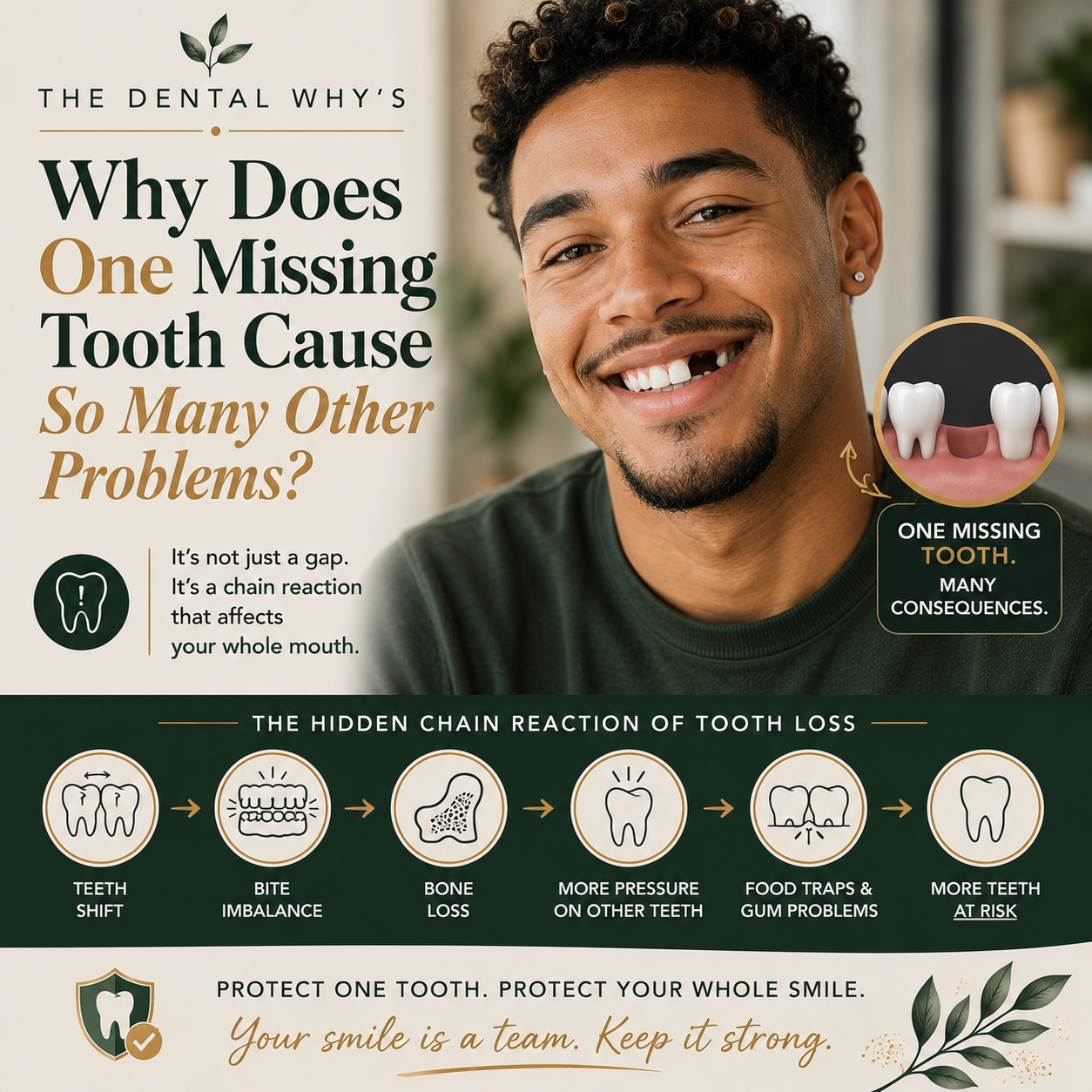
Dental Why's: Why Does One Missing Tooth Cause So Many Other Problems?
Losing one tooth may not seem like a big deal—but your mouth doesn't see it that way. This Dental Why's explores how one missing tooth can affect your entire smile over time.
The Hidden Chain Reaction of Tooth Loss in Richmond TX
"It doesn't really bother me."
That's one of the most common things dentists hear after someone loses a tooth.
Especially if it's in the back where no one can see it.
But here's the Dental Why's:
Why does one missing tooth cause so many other problems?
For many adults in Richmond TX and throughout Fort Bend County, the missing tooth isn't the biggest problem.
It's everything that happens afterward.
Your Teeth Were Designed to Work Together
Each tooth has a job.
Every bite depends on neighboring and opposing teeth sharing the workload.
When one tooth disappears, that balance changes.
Suddenly, the remaining teeth begin doing work they were never designed to do.
Teeth Don't Like Empty Space
Teeth naturally drift toward open spaces.
Over months and years they may:
Tip forward
Lean sideways
Rotate
Create new gaps
This is why patients often notice food trapping after losing a tooth.
The movement is slow—but continuous.
Your Jawbone Needs Stimulation
Teeth don't just help you chew.
Their roots stimulate the jawbone every time you bite.
Without that stimulation, the body begins removing bone from the area.
This natural process is called bone resorption.
Over time it can change:
Facial contours
Gum support
Future treatment options
More Pressure on Fewer Teeth
Imagine carrying groceries with ten people.
Now imagine carrying the same load with nine.
The work doesn't disappear.
It gets redistributed.
The same thing happens in your mouth.
The remaining teeth absorb more force, increasing the risk of:
Cracks
Worn enamel
Broken fillings
Bite problems
Missing Teeth Affect More Than Chewing
Many patients notice changes they never expected:
Speaking feels different
Confidence decreases
Food becomes harder to chew
Cleaning becomes more difficult
The effects extend beyond the empty space.
Replacing a Tooth Restores More Than Appearance
Whether through a dental implant, bridge, or another appropriate option, replacing a missing tooth helps restore:
Bite balance
Function
Bone stimulation
Tooth alignment
Long-term stability
The goal isn't simply filling a gap.
It's protecting the health of the entire mouth.
The Bigger Dental Why's
Why does one missing tooth matter so much?
Because your mouth was designed as a system.
Every tooth supports another.
When one part changes, the entire system adapts.
Sometimes those adaptations help.
Sometimes they create new problems.
Protecting one tooth often means protecting many others.
FAQ
-
Yes. Neighboring teeth can shift, altering your bite and making cleaning more difficult.
-
Yes. Without stimulation from the tooth root, the jawbone gradually loses volume.
-
Even back teeth play an important role in chewing and maintaining bite stability.
-
That depends on your oral health and goals. Common options include dental implants, bridges, and in some cases removable prosthetics.
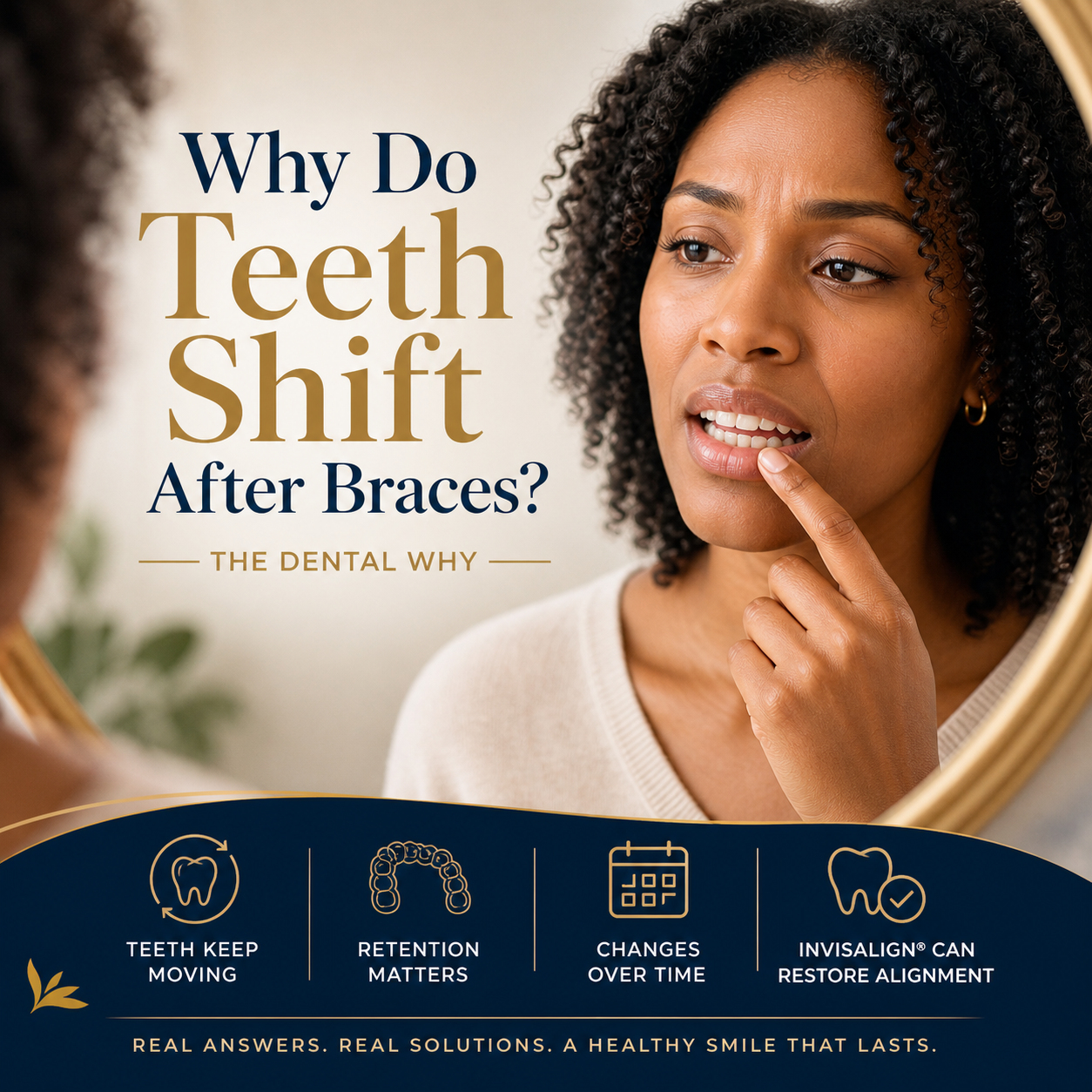
Dental Why’s: Why Do Teeth Shift Even If You Had Braces?
If your teeth have shifted after braces, you’re not alone. This Dental Why explains why movement continues in adulthood — and how Invisalign can restore alignment.
Invisalign in Richmond TX and Why Teeth Move Again in Adulthood
You already did this once.
Braces.
Retainers.
The process.
So why are your teeth moving again?
Here’s the Dental Why:
Why do teeth shift even after orthodontic treatment?
For many adults in Richmond TX and throughout Fort Bend County, the issue isn’t failure.
It’s time.
Teeth Never Stop Moving
Teeth are not fixed permanently in place.
They exist in a dynamic system of:
Bone
Ligaments
Pressure from chewing
Muscle forces from the tongue and lips
Over time, these forces continue to influence position.
Even years after braces.
The Role of Retainers
After orthodontic treatment, retainers are essential.
But many patients:
Stop wearing them
Lose them
Wear them inconsistently
Without retention, teeth naturally begin to drift.
Not dramatically at first.
But gradually.
Why Shifting Often Happens in Adulthood
As we age, subtle changes occur:
Bone density shifts
Gum support changes
Bite forces redistribute
Teeth may crowd forward
Lower front teeth are especially prone to crowding.
That’s why many adults notice changes in their 30s and 40s.
It’s Not Just Cosmetic
Shifting isn’t only about appearance.
It can affect:
How teeth contact when you bite
How easily you can clean between teeth
Long-term wear patterns
For many patients in Fort Bend County, what starts as minor crowding becomes functional over time.
How Invisalign Can Help
Invisalign allows for controlled, precise tooth movement in adulthood.
It can:
Re-align shifted teeth
Restore spacing and contact points
Improve cleanability
Rebalance the bite
For adults in Richmond TX, this is often a second phase — not a restart.
You’re not starting over.
You’re refining.
The Bigger Dental Why
Why do we expect teeth to stay perfectly aligned forever?
The body changes.
Structures adapt.
Movement is part of biology.
The goal isn’t to stop time.
It’s to guide it.
Frequently Asked Questions About Teeth Shifting
-
Without consistent retainer use, natural forces cause teeth to gradually move over time.
-
Yes. Teeth continue to shift slightly throughout life.
-
Yes. Invisalign is commonly used to correct mild to moderate relapse.
-
In most cases, yes. Retainers help maintain alignment long-term.
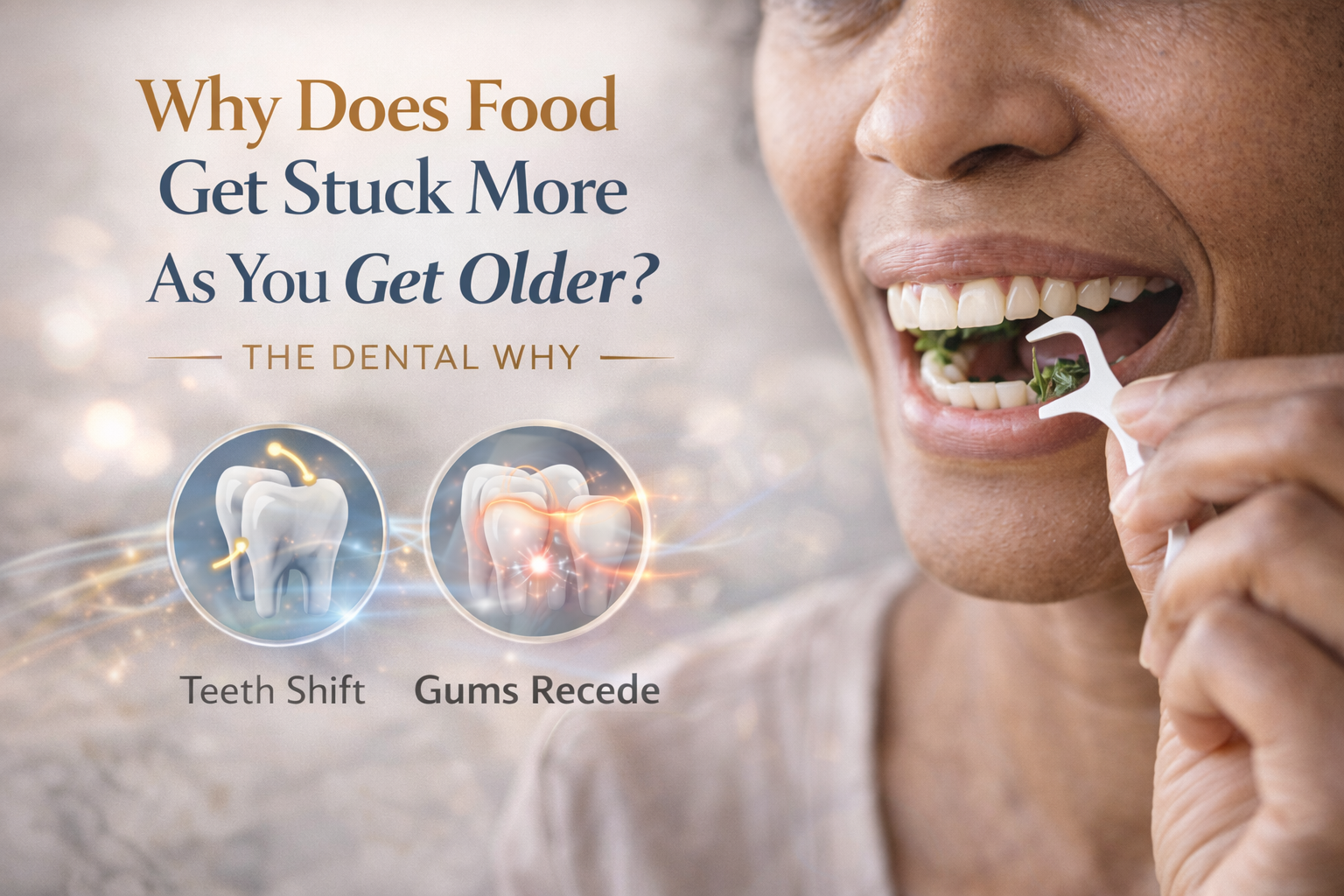
Dental Why’s: Why Does Food Get Stuck More As You Get Older?
If food is getting stuck more often, it’s not random. This Dental Why explores how tooth movement and gum changes create new spaces over time.
Gum Health and Tooth Movement in Richmond TX
You didn’t have this problem before.
Now suddenly:
Food gets stuck.
You feel pressure between teeth.
Floss catches in new places.
Here’s the Dental Why:
Why does food start getting stuck more as we get older?
For many patients in Richmond TX, the answer isn’t food.
It’s shifting.
Teeth Move — Even As Adults
Teeth are not fixed in place forever.
Over time, they:
Shift forward
Rotate slightly
Crowd together
Even small changes create new contact points.
And new gaps.
Gum Changes Create Space
Gums also change over time.
Mild recession can:
Expose root surfaces
Create tiny openings between teeth
Reduce natural protection
Food doesn’t get stuck randomly.
It gets trapped where structure has changed.
Why This Matters More Than You Think
Food trapping isn’t just annoying.
It can lead to:
Localized gum inflammation
Bad breath
Increased cavity risk between teeth
For adults in Fort Bend County, this is often an early sign of structural change.
How Invisalign Can Help
Many patients are surprised to learn:
Invisalign isn’t just cosmetic.
It can:
Re-establish proper contact between teeth
Reduce food traps
Improve cleanability
Support long-term gum health
Alignment restores function.
Not just appearance.
The Bigger Dental Why
Why do we accept small changes as “normal” when they signal something deeper?
Food getting stuck is feedback.
Your mouth is telling you something has shifted.
And small shifts, over time, become bigger problems.
FAQ
-
Tooth movement and gum changes create new spaces where food can collect.
-
Sometimes. It depends on the cause and severity.
-
In many cases, alignment can help restore proper spacing and function.
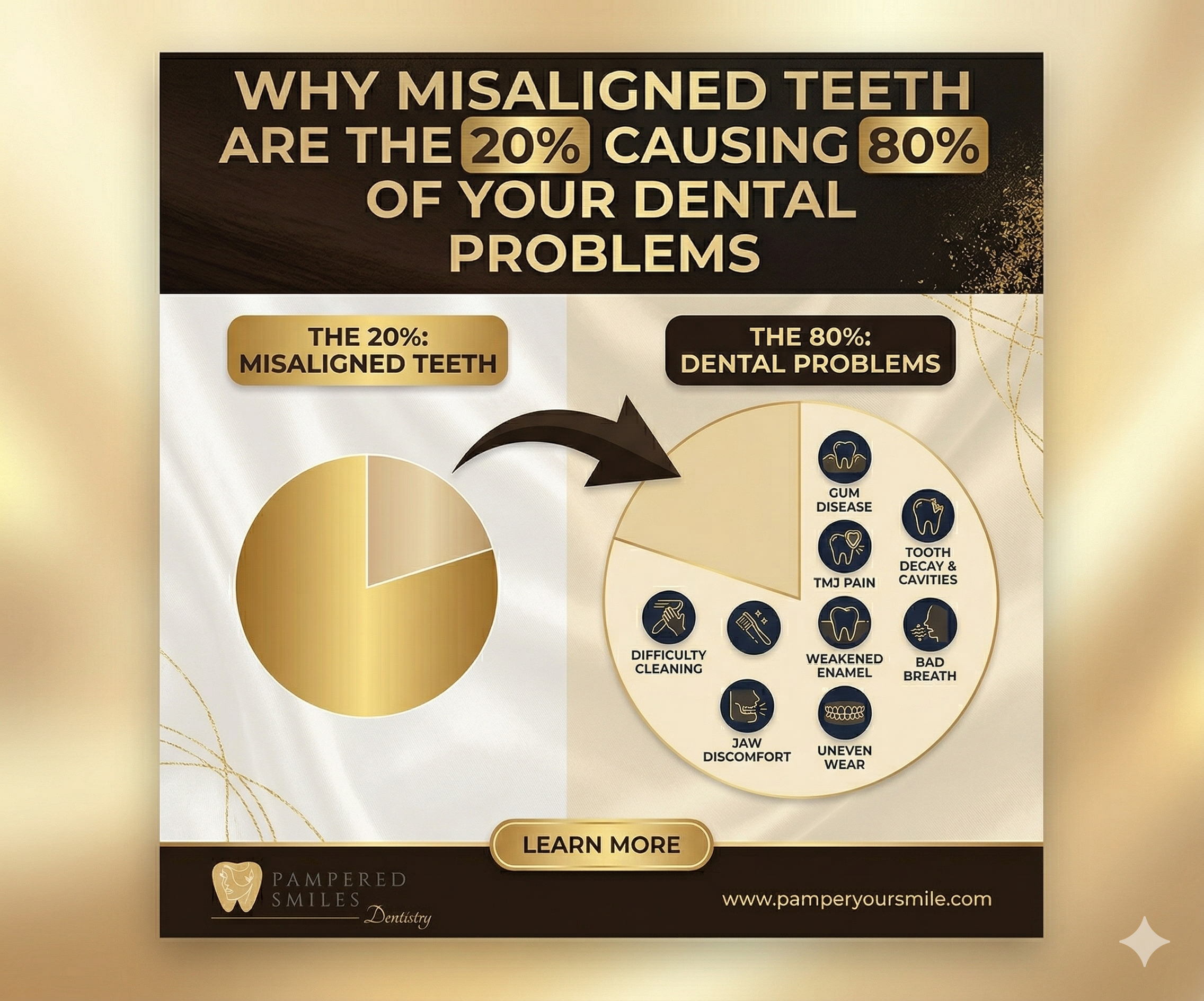
Dental Why’s: Why Misaligned Teeth Are the 20% Causing 80% of Your Dental Problems
You brush. You floss. You do everything right — and you still end up with cavities, cracked fillings, or gum recession. The problem might not be your habits. It might be the angle your teeth are hitting each other every single time you chew.
You're not a bad brusher.
You're not neglecting your teeth.
But you keep ending up in the dental chair with another crack, another cavity, another area of recession — and nobody has ever explained why.
Here's the Dental Why.
The 80/20 Rule Applies to Your Mouth
You may have heard of the Pareto Principle — the idea that 80% of your results come from 20% of your causes. It shows up everywhere in life.
It shows up in dentistry too.
In most patients with recurring dental problems, there is one underlying issue driving nearly everything: misalignment. The way your teeth meet when you bite and chew — your occlusion — determines how force is distributed across every tooth in your mouth.
When that distribution is off, even slightly, certain teeth start absorbing more than their share. And that imbalance doesn't stay quiet for long.
What Misalignment Actually Does
Think of it this way. Your bite generates significant force — up to 200 pounds per square inch on your back molars. That force is designed to spread evenly across all your teeth, like weight distributed across the legs of a table.
Now imagine one leg of that table is shorter than the others. The whole structure becomes unstable. The other legs take on more than they were built for, and eventually something gives.
That's misalignment. And here's what it causes:
Cavities in the same spots repeatedly. When teeth are crowded or rotated, certain surfaces never get properly cleaned — no matter how well you brush. Plaque hides in the overlaps, acid builds, and decay follows. Fix the alignment and the cavity risk drops dramatically.
Cracked and chipped teeth. When force doesn't distribute evenly, certain teeth absorb impact they weren't designed for. Over time, enamel micro-fractures, chips appear, and fillings fail ahead of schedule — not because they were placed poorly, but because the bite is hammering them at the wrong angle.
Gum recession. Many patients assume their recession is from brushing too hard. Often it isn't. When a tooth is out of alignment, the forces of biting hit it at an angle — and the bone around it slowly retreats. The gum follows the bone. That notch at your gumline is frequently a bite story, not a brushing story.
Jaw pain and headaches. Your jaw joints are precision instruments. When your teeth don't meet correctly, your jaw muscles have to compensate on every single chew. Over thousands of chews a day, that compensation becomes chronic muscle fatigue — showing up as jaw tension, clicking, morning headaches, and neck stiffness.
Worn enamel. Teeth that hit at the wrong angle grind against each other rather than gliding past cleanly. That grinding wears enamel flat. Once enamel is gone, it doesn't come back — and the sensitivity, staining, and structural weakness that follow are permanent without restoration.
The Tooth Nobody Suspects
Here's something that surprises almost every patient: the side teeth — the premolars — are almost always the first casualties of misalignment.
They sit right at the corner of the bite, between the tearing force of the canines and the crushing force of the molars. When alignment is off, they absorb impact from both directions. They're often the first to crack, the first to develop recession, and the first to go missing.
And when that side tooth goes, the problems compound. The neighboring teeth start to drift. The opposing tooth over-erupts looking for contact. The remaining teeth absorb even more force. What started as a misalignment issue becomes a full bite collapse — one domino at a time.
Alignment Is Not Just About Looks
This is the most important Dental Why in this article.
Straight teeth are not a cosmetic luxury. They are a functional necessity.
When teeth are aligned, bite force distributes evenly. Cleaning is easier and more effective. Gum tissue stays stable. Enamel lasts longer. The jaw functions without strain.
When teeth are misaligned, none of that works the way it should — regardless of how disciplined your home care routine is. You can be the most dedicated brusher and flosser in Fort Bend County and still have recurring problems if your bite is working against you.
That's not a failure of effort. That's physics.
What We Do at Pampered Smiles
At Pampered Smiles in Richmond, TX, a bite analysis is part of how we look at every patient. We don't just treat the cavity or the crack in isolation — we ask why it happened in the first place.
Because if we restore a tooth without addressing the alignment that broke it, we're just setting that restoration up to fail again.
Whether it's Invisalign to correct the underlying alignment, bite adjustment, or a comprehensive smile plan that addresses both function and aesthetics — we build treatment around your whole bite, not just the tooth that hurts today.
Because fixing the 20% is how you stop the 80%.
FREQUENTLY ASKED QUESTIONS
-
Common signs include teeth that chip or crack repeatedly, gum recession on specific teeth, jaw pain or clicking, uneven wear on your enamel, recurring cavities in the same areas, and headaches in the morning. A bite evaluation at Pampered Smiles can identify whether alignment is contributing to your dental issues.
-
Yes. When a tooth is out of alignment, bite forces hit it at an angle rather than straight down. Over time, this pressure causes the surrounding bone to recede, and the gum tissue follows. This is often mistaken for aggressive brushing but is actually a bite problem.
-
Invisalign addresses both. Modern Invisalign treatment is designed to correct bite relationships — not just straighten teeth for appearance. In many cases, correcting alignment with Invisalign reduces the risk of cracking, recession, and jaw strain that comes with a misaligned bite.
-
Recurring cavities in the same locations often signal a crowding or alignment issue. When teeth overlap or rotate, certain surfaces are impossible to clean effectively — creating a permanent hiding spot for plaque and bacteria regardless of how well you brush and floss.
-
Yes. We assess bite balance, alignment, and wear patterns as part of our comprehensive approach to your dental health. If misalignment is contributing to your recurring problems, we will identify it and walk you through your options.
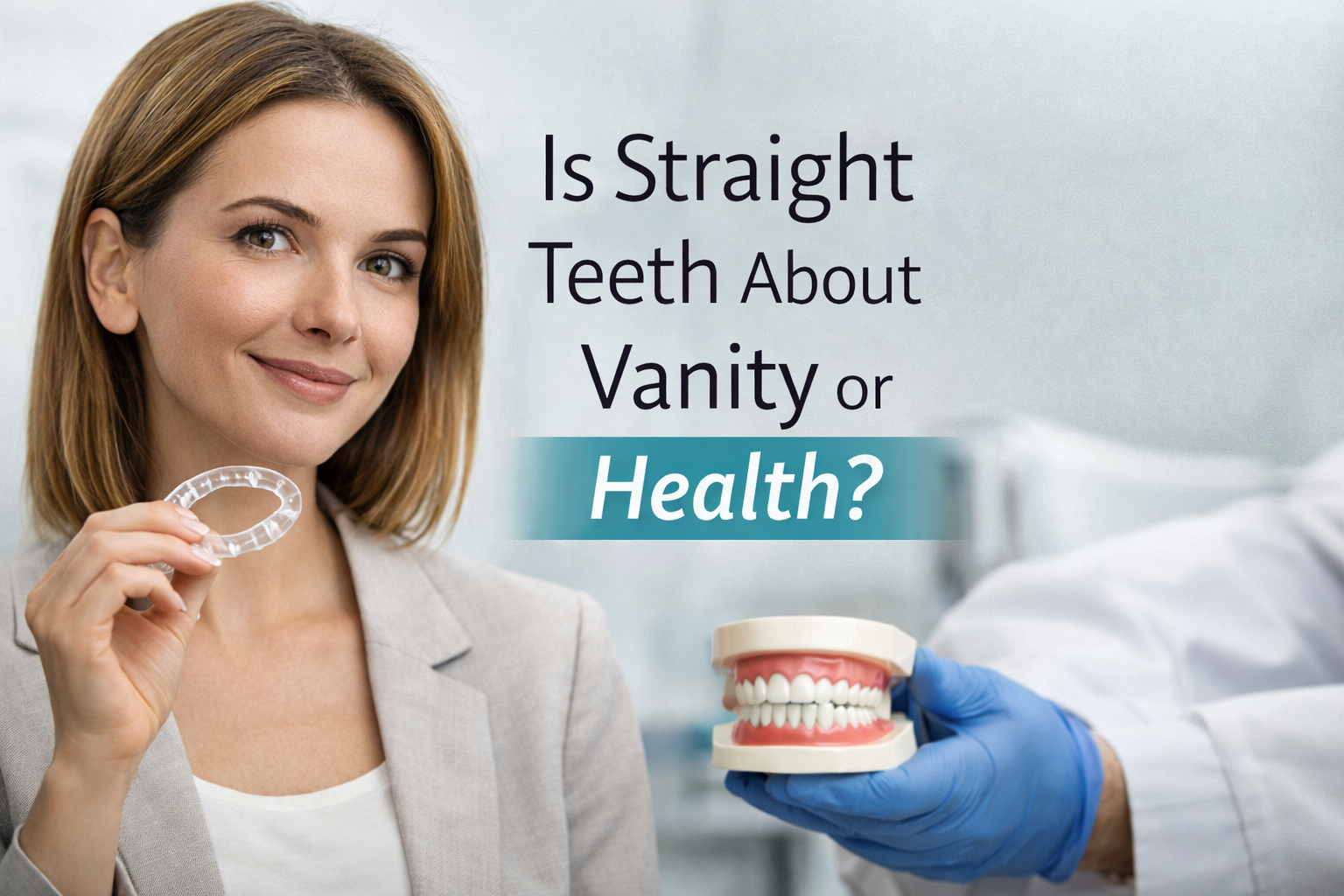
Dental Why’s: Why Do People Think Straight Teeth Are Just About Vanity?
Are straight teeth really about vanity — or about long-term oral health? Many adults in Richmond TX are discovering that Invisalign supports bite balance, gum stability, and confidence without hesitation.
Invisalign in Richmond TX and the Health Behind Alignment
Straight teeth are often dismissed as cosmetic.
Something nice to have.
Something aesthetic.
Something optional.
Here’s the Dental Why:
Why do so many people assume alignment is about vanity — when biology suggests otherwise?
For many adults in Richmond TX and throughout Fort Bend County, Invisalign isn’t about perfection.
It’s about protection.
Where the Vanity Narrative Came From
Orthodontics has long been associated with adolescence.
Teenagers.
Yearbooks.
Braces before prom.
So when adults consider Invisalign, it can feel indulgent — even unnecessary.
But teeth do not stop shifting after high school.
In fact, many adults in their 30s and 40s experience:
Increasing crowding
Worsening bite imbalance
Uneven enamel wear
Gum recession in tight areas
Jaw tension from misalignment
Alignment isn’t cosmetic biology.
It’s functional biology.
What Crooked Teeth Actually Affect
When teeth are not aligned properly, force is not distributed evenly.
Over time, that can lead to:
Chipping along front edges
Flattened biting surfaces
Micro-fractures in enamel
Increased sensitivity
Accelerated wear
Crowded teeth are also harder to clean.
Which means:
More plaque retention
Higher risk of gum inflammation
Greater long-term periodontal concerns
For adults seeking Invisalign in Richmond TX, the motivation is often health-first — not appearance-first.
Why Confidence Is Still Part of the Equation
Here’s where it gets honest.
While alignment protects oral health, it also changes how someone feels.
Many high-performing adults quietly admit:
They hide their teeth in photos.
They cover their mouth when laughing.
They angle their face on video calls.
Not because they lack success.
Not because they lack intelligence.
But because something feels slightly misaligned.
When Invisalign corrects bite and spacing, patients often report something subtle:
They stop thinking about their smile.
That mental freedom matters.
Confidence is not vanity.
It’s congruence.
Why Adults in Richmond TX Are Choosing Invisalign
Modern Invisalign treatment allows for:
Digitally mapped tooth movement
Bite-focused planning
Conservative alignment before cosmetic enhancement
Discreet treatment for professional lifestyles
For many adults in Fort Bend County, alignment becomes the foundation for long-term oral health — and, in some cases, future cosmetic improvements like whitening or veneers.
The goal is not artificial perfection.
The goal is structural balance.
The Bigger Dental Why
Why do we label straight teeth as vanity — but ignore the science behind alignment?
Teeth were designed to function in harmony.
When that harmony is disrupted, biology compensates — often at a cost.
Invisalign in Richmond TX isn’t about chasing an ideal.
It’s about preserving what you already have.
Sometimes what looks cosmetic is actually preventative.
Frequently Asked Questions About Invisalign in Richmond TX
Is Invisalign just cosmetic?
No. Invisalign improves alignment, which supports bite balance, enamel preservation, and gum health.
Can crooked teeth cause long-term damage?
Yes. Uneven force distribution can lead to chipping, wear, and gum recession over time.
Am I too old for Invisalign?
Teeth can move at any age as long as they are healthy. Many adults in Fort Bend County pursue Invisalign in their 30s, 40s, and beyond.
Does Invisalign hurt?
Most patients experience mild pressure when switching aligners, but it is generally well tolerated.